

HOMEOWNER GUIDE · HOME RESTORATION MASTERS
Understanding Mold Lab Results
Indoor versus outdoor samples, common mold names and what the numbers can—and cannot—tell you about a building.
Updated October 26, 2026 · Serving Miami-Dade and Broward
Why compare outdoor and indoor samples?
Outdoor spores can enter a building. An outdoor sample provides a reference for the conditions around the property at the time of testing. We compare the types present, their concentrations and the overall pattern alongside the inspection—not just the total count.
Weather, season, doors and windows, HVAC operation, cleaning and activity may affect results. A short sample represents a particular location and time. One outdoor sample is a reference, not a permanent background level or a health standard. More on indoor/outdoor sampling.
A lower indoor total is not the whole answer
Invented teaching example—not a customer report or a safety threshold. All figures below are spores/m³.
| Spore group | Outdoor reference | Indoor room |
|---|---|---|
| Penicillium/Aspergillus types | 100 | 800 |
| Cladosporium | 1,200 | 100 |
| Other spores | 700 | 100 |
| Total | 2,000 | 1,000 |
The indoor total is lower, but the Penicillium/Aspergillus group is higher indoors. That difference warrants evaluating a possible indoor source with the moisture and visual findings. It is not, by itself, proof of growth, illness or a pass/fail result.
How to read the main columns
Raw count and spores/m³
The raw count is what the analyst counted. Spores/m³ is a concentration based on the air volume and analytical method. Compare concentrations from compatible methods, not raw counts from unequal sample volumes.
Percent and detection limits
Percent describes the sample’s mix, not a health score. A dash, “not detected” or a less-than sign must be read using that report’s key and detection limit. Non-detection in one sample does not prove absence throughout a building.
Air versus surface swabs
Air samples describe captured airborne material. Swabs describe the sampled surface and may use counts/cm² or qualitative categories. Do not compare those numbers directly with spores/m³.
Lab notes and limitations
Read comments about debris, estimates, sample condition, collection media, area or volume sampled and analytical sensitivity before drawing conclusions. A qualified assessor must decide whether a limitation affects interpretation.
What mold looks like on building materials
Damp drywall paper, wood, wallpaper and cabinetry can support growth. Appearance varies with the substrate and conditions. A photograph can document discoloration or damage, but cannot reliably identify a genus, species or toxin. CDC mold overview · Why color is not a danger rating.
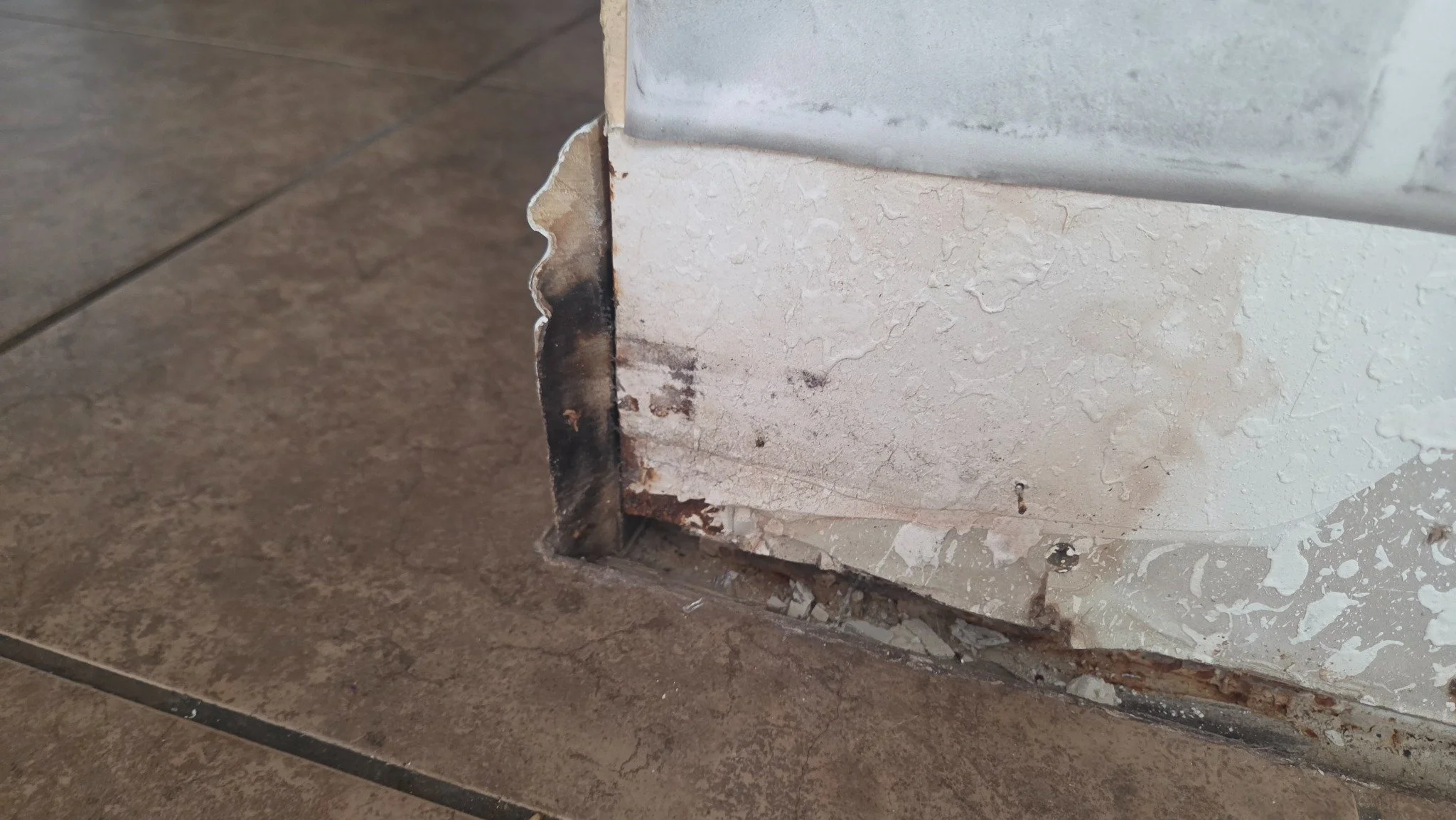
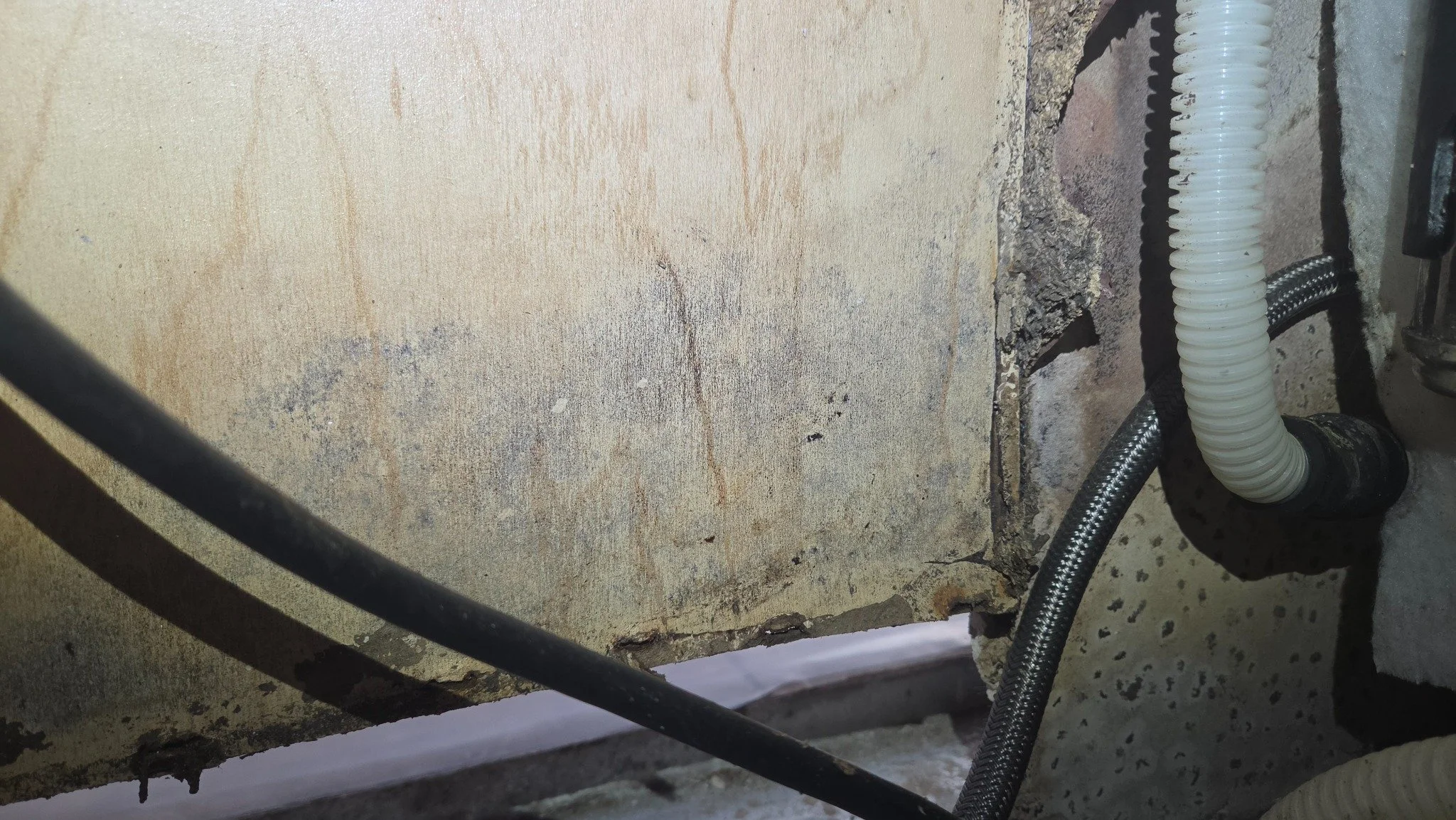
See the Pembroke Pines assessment and sampling project · See another real assessment in Hallandale Beach.
Common names on reports: microscope reference gallery
A review of selected project reports in our files included Penicillium/Aspergillus types, Cladosporium, Chaetomium and Stachybotrys. Alternaria is included here as another commonly reported environmental type. This selection is educational; it is not a survey or ranking of mold frequency in South Florida homes.
These are credited reference micrographs, not microscope photographs from HRM customer samples. Several show cultured structures rather than the isolated spores seen on a routine spore-trap slide. Staining and magnification vary. They are not a homeowner identification tool, and the reference species must not be assumed to be the species in a grouped lab result.
Aspergillus

Often reported with Penicillium as a combined spore-trap group. That label does not establish the species.
Health context: Most people do not become ill from Aspergillus. Certain species can cause infection, with greater risk in people with weakened immunity or lung disease. A building result is not an infection diagnosis. Read the source.
Penicillium

A common indoor and outdoor mold group. Some species grow on damp building materials; the report may say Penicillium/Aspergillus types.
Health context: Penicillium can trigger allergic reactions and asthma symptoms in sensitized people. Finding the group does not establish a particular person’s response. Read the source.
Cladosporium

One of the common indoor molds listed by CDC. Outdoor entry must be considered when interpreting an indoor finding.
Health context: As with other molds, allergy, irritation and asthma concerns depend on the person. A Cladosporium count alone does not establish whether symptoms are caused by the building. Read the source.
Chaetomium

Can grow on cellulose-containing materials such as paper and wood. Its presence is considered with water damage and the sampled location.
Health context: Reported to be allergenic. Detection is a reason to evaluate the building conditions, not evidence that an occupant has a particular disease. Read the source.
Stachybotrys

S. chartarum favors persistently wet cellulose-rich materials such as drywall paper and fiberboard. Black color alone cannot identify it.
Health context: CDC advises addressing this mold as with other molds. No test proves that S. chartarum caused particular symptoms. Its name on a report does not establish toxin exposure. Read the source.
Alternaria

A spore type that can appear in outdoor and indoor samples. Its presence must be read alongside the outdoor reference and site observations.
Health context: The general mold concerns—possible allergic or irritant symptoms and asthma reactions in susceptible people—apply. Detection alone does not predict an individual’s health risk. Read the source.
What do these findings mean for health?
Mold exposure may cause no symptoms, or may contribute to congestion, cough, wheeze, eye or skin irritation. People with asthma, mold allergies, weakened immunity or chronic lung disease may need additional precautions. An environmental sample cannot diagnose a medical condition or identify the cause of someone’s symptoms. CDC health information.
There is no universal airborne count or indoor/outdoor ratio that predicts individual health risk. A spore-trap report also does not measure mycotoxin exposure. A mold name or dark color is not proof of poisoning. CDC/NIOSH on testing limitations.
Discuss persistent or worsening symptoms with a healthcare professional. People with weakened immunity or lung disease should ask their clinician about avoiding damp or moldy areas. Seek urgent medical help for severe breathing difficulty. We assess building conditions; medical diagnosis belongs to your healthcare provider.
When is mold sampling useful?
Sampling should answer a defined question. It may support investigation of a suspected source or an agreed verification scope, but visible growth often does not need testing before the moisture and material problem is addressed. EPA notes that sampling is usually unnecessary when mold is already visible. Read EPA’s explanation.
From a report to the next step
- Confirm the question and sample quality. Review locations, methods, lab notes and limitations.
- Connect the findings to the building. Consider leak history, moisture measurements, odors and accessible material conditions.
- Correct the moisture source. Decide what cleaning, material removal or further investigation is appropriate.
- Verify the agreed work. Use the project’s assessment or remediation scope, including independent verification when required.
Discuss your property or lab report
Home Restoration Masters helps homeowners in Miami-Dade and Broward investigate moisture and mold concerns. Contact us to discuss your inspection needs and the appropriate scope.
Call (786) 282-4834Request an Assessment
Mold testing and inspection · Mold remediation · Our team and credentials
Sources and image credits
Health and sampling explanations draw on CDC Mold, CDC/NIOSH Mold, Testing and Remediation, CDC Stachybotrys facts, CDC Aspergillosis Basics, EPA Mold Testing or Sampling, SUNY ESF indoor air sampling, University of Minnesota Chaetomium reference and INSPQ Penicillium reference.
Image credits and license links appear under each microscope image. Reference image providers do not endorse Home Restoration Masters. Customer names, addresses and report files are not published. This guide provides building assessment education, not medical advice.